
Safety

Safety is not a feature. It is the foundation.
Supervised ketamine therapy requires a high standard of structure. Every step in the KetamineHubs model — from screening to follow-up — is designed with safety as the primary consideration.
Ketamine is a controlled substance with real clinical risks. KetamineHubs does not minimise those risks — it addresses them directly through clinical oversight, required safety monitoring, and defined protocols for every session.
Check eligibility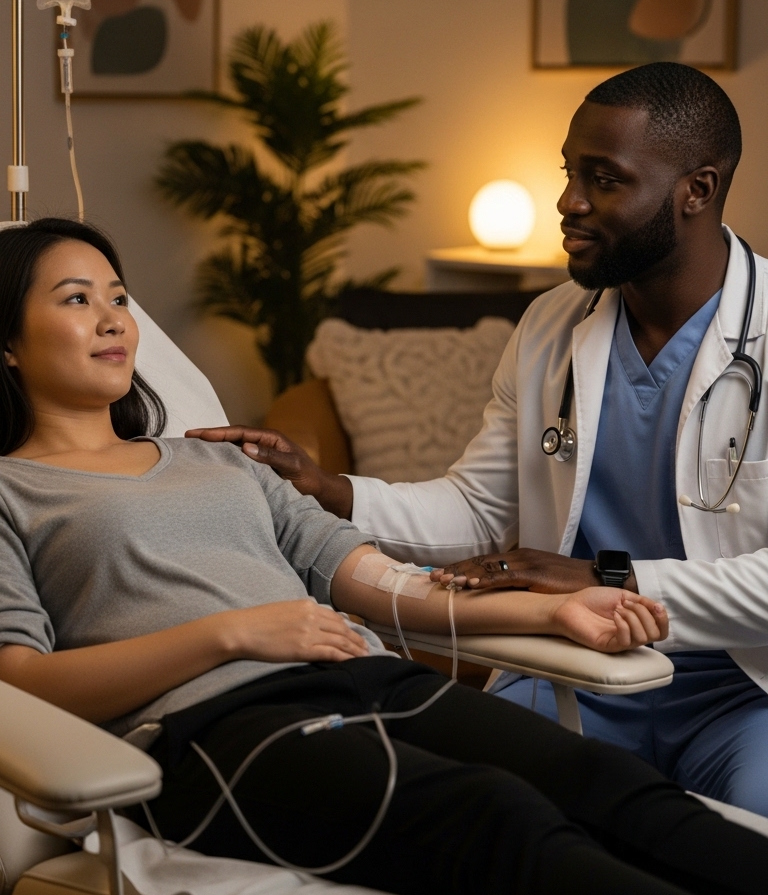
Four pillars of safe care
Each layer exists because supervised treatment requires more safeguards, not fewer.
Clinical screening
Every patient is reviewed by a licensed clinician before treatment is approved. Medical history, current medications, and psychiatric stability are all assessed. Some presentations are contraindicated and will not proceed.
clinical team supervision
Every session is supervised at the Clinton, MD center with defined safety responsibilities.
Session protocols
Sessions follow defined preparation steps. Environment setup, timing, and what not to do during a session are communicated clearly. Deviations from protocol are grounds for pausing or stopping a program.
Follow-up review
A clinician check-in occurs after each session. Adverse effects, unexpected responses, and emerging concerns are assessed before continuation is approved. Care does not proceed on autopilot.
Clear expectations before, during, and after
These are not suggestions. They are requirements that exist to protect you during a session where your judgment will be temporarily affected.
Before your session
-
Fast as instructed
Your clinician will specify how long to avoid food and drink before a session. Follow this precisely — it affects medication response and safety.
-
Arrange your environment
A quiet, private, comfortable space is required. Lighting, temperature, and distractions should be addressed before the session begins.
-
Confirm supervision arrangement
Clinical staff supervise all sessions at the center. Remote-only supervision does not replace onsite protocols.
-
Review what to expect
Preparation materials provided before your session should be read in advance. Going in informed reduces anxiety and improves the experience.
During and after your session
-
Follow session boundaries
Remain in the designated treatment space until your clinical team confirms the session has ended.
-
No driving for 24 hours
You must not drive or operate any vehicle for at least 24 hours after a session. Arrange transportation and do not drive for at least 24 hours after treatment.
-
Report unexpected responses
If anything unusual happens during or after a session, contact the care team. Your clinician reviews this before your next session regardless.
-
Complete integration prompts
The follow-up integration steps are part of your care plan, not optional extras. They help you process session content and give your clinician useful information.
In a mental health or medical emergency?
Do not use the KetamineHubs intake process in place of emergency care. If you or someone else is in immediate danger, contact local emergency services (911) or go to your nearest emergency room. The 988 Suicide and Crisis Lifeline is available 24/7 by calling or texting 988.

Safety questions
Honest answers to the safety questions we hear most often.
Is ketamine safe to take at home?
With the right safeguards, supervised ketamine therapy can be administered responsibly. The key requirements are: thorough clinical screening to confirm eligibility, a physically present clinical team supervision during every session, defined session protocols, and structured clinician follow-up. KetamineHubs does not allow any of these requirements to be skipped.
What are the main risks of ketamine therapy?
Ketamine can cause temporary dissociation, altered perception, nausea, dizziness, and increased blood pressure. In rare cases, adverse psychological responses can occur. These risks are managed through pre-treatment screening, careful dosing, the clinical supervision requirement, and post-session clinician review.
What is clinical team supervision and why are they required?
Sessions are supervised by licensed clinical staff at the Clinton, MD center. This supervision is a non-negotiable safety requirement.
What happens if something goes wrong during a session?
Your care team is your first point of contact during a session. For medical emergencies, call 911. For non-emergency concerns during or after a session, contact the care team through the platform. All session concerns are reviewed by your clinician before the next session proceeds.
Can I stop a program if I want to?
Yes. You can pause or stop your program at any time. Your clinician will conduct a review if you wish to stop, both to document your experience and to ensure any lingering concerns are addressed before you leave the program.